Innovation on a Budget: Five Experiments to Fund This Quarter — and Three to Skip
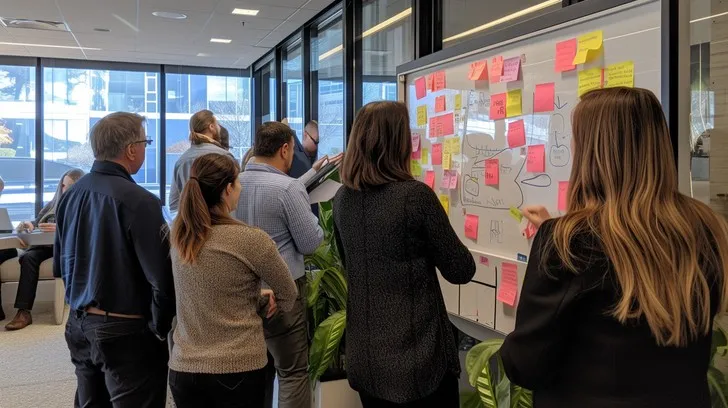
Photo: team planning sticky notes whiteboard strategy session, via images.stockcake.com
The innovation advice aimed at mid-sized American businesses tends to come in two flavors: visionary and useless, or practical and obvious. What's missing is a middle path — concrete experiments that cost less than a trade show booth, run in weeks rather than quarters, and produce evidence you can act on.
The mindset shift matters more than any single idea. Treat innovation as a portfolio: several small positions, each with a defined budget, a timeline, and one metric that decides its fate. A portfolio can tolerate failures. A leap of faith cannot. With that framing, here is what's worth your money this quarter — and what isn't.
Worth Running
1. AI-assisted support triage. Route every inbound customer message through a model that classifies urgency, drafts a response, and escalates the ambiguous ones to humans. Budget: $2,000–$5,000 including tooling and setup time. Timeline: four to six weeks. The metric that matters: time-to-first-human-response for complex issues. If it drops meaningfully without a spike in escalations, expand. If customers notice and complain, stop.
2. A micro-subscription for a narrow audience. Pick one underserved slice of your customers — not all of them — and offer a small paid tier for a specific ongoing benefit: priority scheduling, quarterly reviews, early access. Budget: under $3,000. Timeline: eight weeks. Metric: conversion rate from invitation to paid. Anything above five percent suggests real demand worth productizing; below two percent, the willingness to pay was in your imagination.
3. Automated quote generation for your sales team. If your sales cycle involves custom quotes, build a simple configurator that produces a defensible first-draft quote in minutes. Budget: $5,000–$15,000 depending on complexity. Timeline: six to ten weeks. Metric: quote turnaround time. Faster quotes compress sales cycles, and the correlation is usually visible within a single quarter.
4. A weekly customer-interview cadence with AI summarization. Not a research project — a standing operation. Fifteen interviews over eight weeks, recorded, transcribed, and summarized by model, with themes tracked over time. Budget: under $2,000. Timeline: eight weeks. Metric: number of product or process decisions directly traceable to an interview. If that number is zero, you're collecting anecdotes, not intelligence.
5. A retired-channel sunset test. Identify your lowest-performing digital channel — a neglected email sequence, a paid channel that barely breaks even — and stop it entirely for six weeks. Budget: negative; you save money. Metric: incremental revenue lost. Most companies discover the channel was contributing nothing, and the savings fund experiments one through four.
Worth Skipping
A custom mobile app. Unless your customers have asked for one by name, repeatedly, a native app is a five-figure commitment to a hypothesis you haven't tested. A well-built mobile web experience delivers eighty percent of the value at twenty percent of the cost.
An enterprise-scale AI transformation program. Anything with the word "transformation" in the kickoff deck and a timeline measured in years is a bet no mid-sized business should make on faith. Run experiment one instead, learn, then scale what works.
A metaverse, VR, or immersive-brand initiative. The audience remains thin, the measurement remains fuzzy, and the case studies that justify it come from brands with budgets and risk tolerance you don't share. Revisit in three years.
The Discipline That Ties It Together
The common thread across the winners is a single, honest metric and a pre-committed kill criterion. Write down, before the experiment starts, what result ends it. The businesses that waste money on innovation rarely pick the wrong ideas — they pick reasonable ideas and then refuse to stop when the evidence does. Fund five bets, kill three without sentiment, and you'll end the quarter with more than money left over: you'll have proof of what your customers actually want.